The internal conflict in the Democratic Republic of Congo has not yet affected copper production and transportation [SMM Analysis]

Published: Mar 14, 2025 13:59
Source: SMM
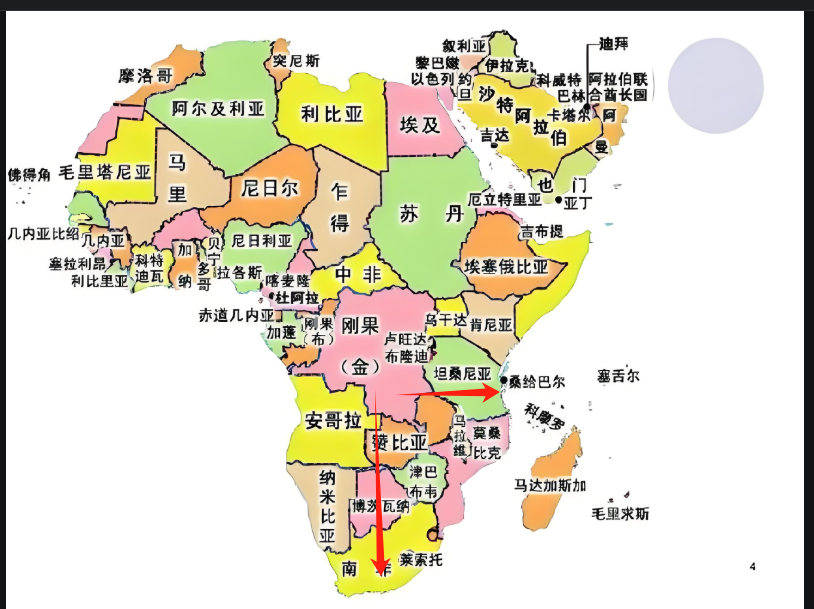
[SMM Analysis: The internal conflict in the Democratic Republic of Congo has not yet affected copper production and transportation] it can be seen that the conflict affected areas in the Democratic Republic of Congo are mainly located in the northern and eastern provinces, while the distribution of copper resource production is mainly on the southernmost edge of the copper mineralization belt in the southern provinces of Katanga and Lualaba. There is a significant gap between the war zone and the copper resource production area. At present, we have not heard of any conflict affecting copper mine production.On the other hand, the resource exports of the Democratic Republic of Congo are mainly transported by railway directly to Angola, Dar es Salaam Port in Tanzania, and Durban Port in South Africa. The railway lines are mostly extended horizontally or southward and do not pass through the war zone in the north. At present, there is no news that the copper mine transportation line has been affected by the conflict.

》View SMM Copper Prices, Data, and Market Analysis

》Subscribe to View SMM Historical Spot Metal Prices

Since the beginning of 2025, the conflict in the Democratic Republic of Congo has been escalating and affecting the production of metal resources. According to news reports, in January 2025, the anti-government armed group "M23 Movement" in the Democratic Republic of Congo intensified its offensive and formed a siege on Goma, the capital of North Kivu province in the eastern part of the country. On the 25th, the Congolese military announced that with the support of the United Nations Stabilization Mission in the Democratic Republic of the Congo and the Southern African Development Community (Southern African Development Community) peacekeeping force, government forces repelled the attack of the "M23 Movement" on Goma. On February 6, 2025, according to the Congolese News Agency (ACP), the government of the Democratic Republic of Congo issued an international arrest warrant for the leader of the rebel organization "Congo River Union" affiliated with the "M23 Movement", Nangang. On February 8, 2025 local time, the Eastern Community and Southern Community held a joint summit and issued a communiqu é calling on the Democratic Republic of Congo to cease the conflict. On February 15, 2025 local time, the anti-government armed group "M23 Movement" in the Democratic Republic of Congo announced that it had taken control of the Kavumu Airport in South Kivu Province. On February 16th local time, the "M23 Movement" invaded Bukavu, the capital of South Kivu province, the second largest city in the east. On February 16th, the government of the Democratic Republic of Congo announced that the anti-government armed group "M23 Movement" had entered Bukavu, the second largest city in the eastern part of the country and the capital of South Kivu province. On February 18, local time, it was reported that the Burundi army, which was carrying out peacekeeping missions in South Kivu Province of the Democratic Republic of the Congo and blocking the anti-government "M23 Movement", began to withdraw from the country after the "M23 Movement" occupied Bukavu, the capital of South Kivu Province.
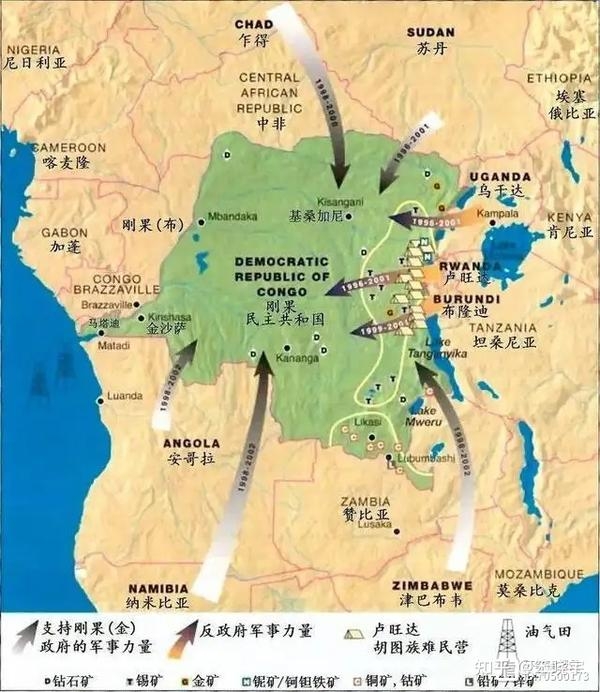
Due to the escalating conflict in the Democratic Republic of Congo (DRC), which has affected tin and tantalum mining areas, on March 13, 2025, Bisie mine operator Alphamine Resources announced that it has temporarily suspended operations at mines in the eastern Democratic Republic of Congo (DRC). Bisie is the third largest tin mine in the world, with a tin concentrate production of 17.300 tons in 2024, accounting for approximately 6% of the global tin supply. Today, the prices of tin and tantalum directly rose.
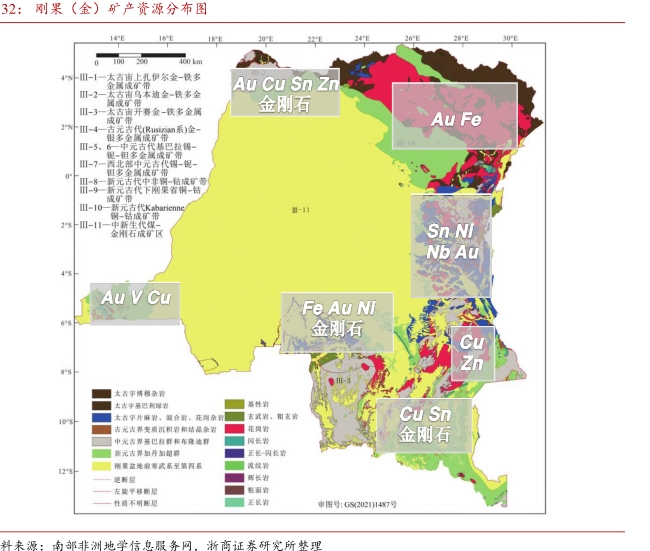
From the graph, it can be seen that the conflict affected areas in the Democratic Republic of Congo are mainly located in the northern and eastern provinces, while the distribution of copper resource production is mainly on the southernmost edge of the copper mineralization belt in the southern provinces of Katanga and Lualaba. There is a significant gap between the war zone and the copper resource production area. At present, we have not heard of any conflict affecting copper mine production.
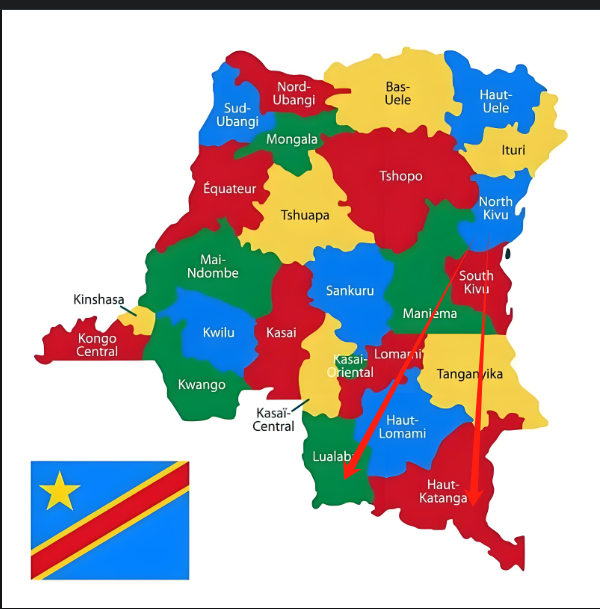
On the other hand, the resource exports of the Democratic Republic of Congo are mainly transported by railway directly to Angola, Dar es Salaam Port in Tanzania, and Durban Port in South Africa. The railway lines are mostly extended horizontally or southward and do not pass through the war zone in the north. At present, there is no news that the copper mine transportation line has been affected by the conflict.

》Click to View the SMM Copper Industry Chain Database

Data Source Statement: Except for publicly available information, all other data are processed by SMM based on publicly available information, market communication, and relying on SMM‘s internal database model. They are for reference only and do not constitute decision-making recommendations.

For any inquiries or to learn more information, please contact: lemonzhao@smm.cn
For more information on how to access our research reports, please contact:service.en@smm.cn
Related News
"Premier Li Qiang Leads State Council Meeting on Enhancing Effective Investment, Boosting Economic Growth"
Feb 6, 2026 23:56
"Premier Li Qiang Leads State Council Meeting on Enhancing Effective Investment, Boosting Economic Growth"
Read More
"Premier Li Qiang Leads State Council Meeting on Enhancing Effective Investment, Boosting Economic Growth"
Premier Li Qiang presided over an executive meeting of the State Council to study policy measures for promoting effective investment. The meeting noted that promoting effective investment plays an important role in stabilizing economic growth and strengthening momentum for development. It is necessary to innovate and improve policy measures, and intensify efforts to enhance the efficiency of utilizing funds such as central budget investments, ultra-long-term special treasury bonds, local government special bonds, and new-type policy-based financial instruments. In conjunction with formulating and implementing the 15th Five-Year Plan
Feb 6, 2026 23:56
"Guided by Xi Jinping Thought, Implement 20th CPC Congress Spirit, Apply New Development Philosophy...
Feb 6, 2026 23:54
"Guided by Xi Jinping Thought, Implement 20th CPC Congress Spirit, Apply New Development Philosophy...
Read More
"Guided by Xi Jinping Thought, Implement 20th CPC Congress Spirit, Apply New Development Philosophy...
Guided by Xi Jinping Thought on Socialism with Chinese Characteristics for a New Era, we will thoroughly implement the spirit of the 20th National Congress of the Communist Party of China and the plenary sessions of the Party’s 20th Central Committee, fully and faithfully apply the new development philosophy, strengthen top-level design, build computing power interconnection nodes oriented toward national hub periods, major strategic regions, and key industries, establish a system of computing power interconnection nodes, improve the efficiency and service level of public computing power resources, and promote high-quality development of computing power.
Feb 6, 2026 23:54
Indirect Iran-US Nuclear Talks in Muscat Show Progress, Omani FM Mediates Tense but Efficient Discussions
Feb 6, 2026 23:47
Indirect Iran-US Nuclear Talks in Muscat Show Progress, Omani FM Mediates Tense but Efficient Discussions
Read More
Indirect Iran-US Nuclear Talks in Muscat Show Progress, Omani FM Mediates Tense but Efficient Discussions
After intensive indirect consultations, the new round of nuclear talks between Iran and the US in Muscat, the capital of Oman, has achieved phased progress. It is reported that during this round of talks, the Iranian and US delegations did not meet directly. Instead, Omani Foreign Minister Badr acted as an intermediary, conveying a series of core proposals, strategic concerns, and policy positions to the other side. The atmosphere at the talks was tense yet efficient. According to preliminary on-site assessments, although both sides continue to negotiate over specific terms, they have reached a consensus on the key objective of "continuing dialogue."
Feb 6, 2026 23:47